


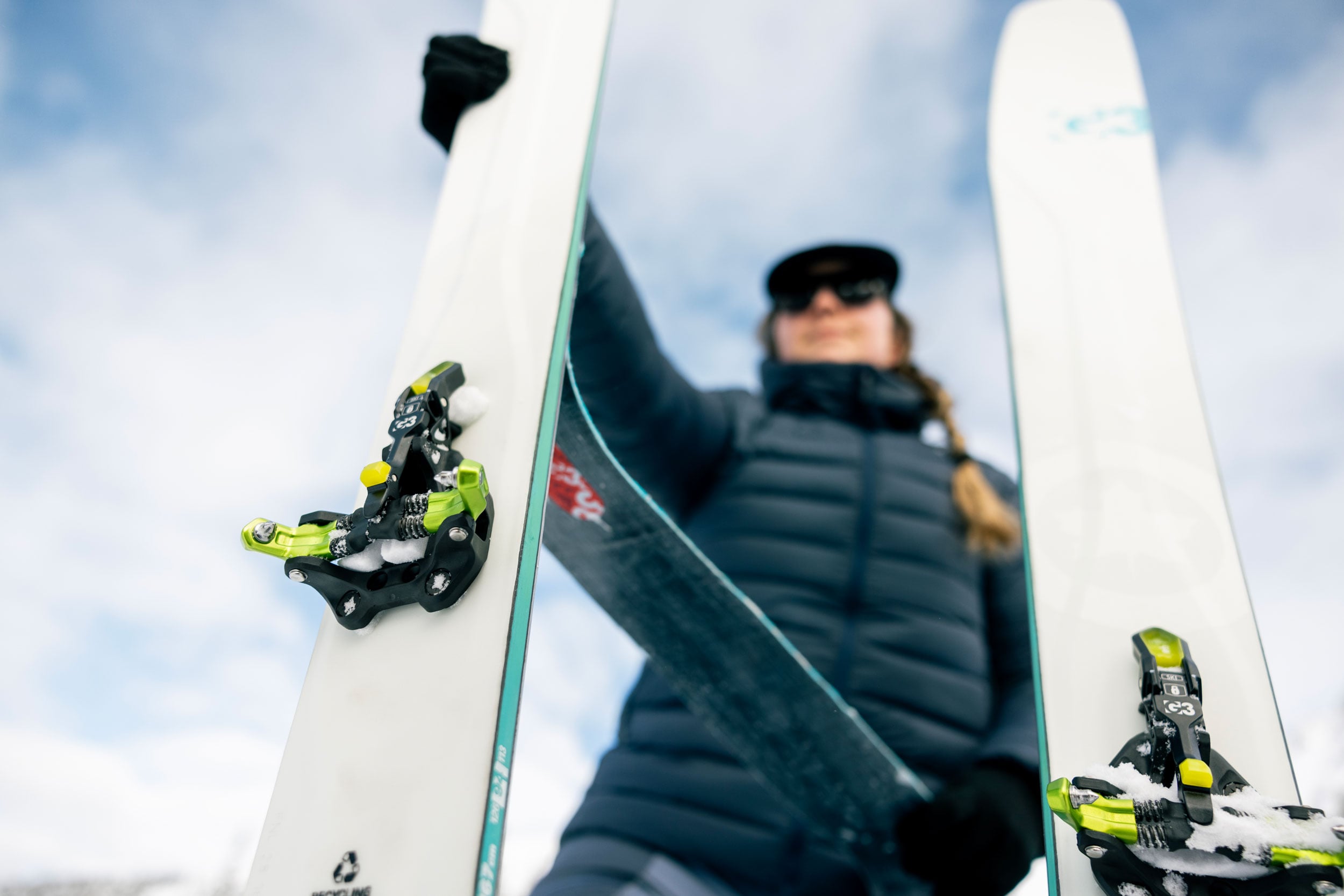
You’ve done the research, you’ve picked your bindings, and now you’ve got a fresh set of ION or ZED bindings to mount onto your skis. Unless you’re a certified gear nerd with a mounting jig in your garage, your next stop is your local shop.
Think of the shop tech as your mountain partner for this mission. To get the best performance out of your gear, you need to communicate clearly before they start drilling. Tech bindings (like ours) have a few specific quirks that differ from the resort bindings you might be used to.
Here is how to speak "shop tech" to make sure your setup is dialed from day one.
1. The Magic Number: Boot Sole Length (BSL)
In the resort world, a few millimetres of wiggle room might be okay. In the backcountry, precision is everything.
- What to tell them: Don't just give them your "size." Tell them the exact Boot Sole Length (BSL) in millimetres, usually found embossed on the heel of your boot.
- Why it matters: G3 bindings feature a wide freeride mount for better power transfer. To maximize that performance and ensure your forward pressure is spot on, the mount needs to be centered on your boot's specific length.
2. Toe and Heel: It’s All About the Gap
Unlike alpine bindings that "cup" the boot, tech bindings rely on pins, and setting the precise heel gap (or forward pressure) is critical for performance.
- What to check: After the boots are mounted and clicked in, take a quick look at the heel piece’s length adjustment track. The heel should be positioned near the center of the available adjustment range (22mm for ION, 30mm for ZED). Also, while other tech bindings recommend leaving a gap at the heel, G3 is a bit different. For best performance, no gap should be left between the heel assembly and the boot.
- Why it matters: A centered mount is the 'sweet spot'—it ensures you have consistent release and retention on day one and leaves you ample room to fine-tune the setting or accommodate a new boot with a slightly different Boot Sole Length (BSL) in the future.
3. To Brake or Not to Brake?
If you’re rocking the ZED, the brakes are optional and sold separately.
- What to tell them: If you’ve purchased the add-on brakes, make sure the shop knows you want them installed. ZED brakes are super easy to install or remove with a simple Pozi #3 screwdriver.
If ION is your jam, then brakes come already included. It’s worth noting that sometimes the brakes on the ION appear to be smaller than their advertised size. However, that is because they are in the stowed position. When deployed in ski mode they will get wider.
4. Release Values (RV) — Not Just a "DIN"
Technically, tech bindings use Release Values (RV) rather than the certified DIN standard found in resort bindings.
- What to tell them: Be honest about your weight, height, and skiing style. G3 bindings use a single screw for both vertical and lateral release adjustments, making it simple for the tech to get you exactly where you need to be.
- Release Value (RV) vs DIN: While the terms are often used interchangeably, Release Value (RV) is the term used by tech binding manufacturers to describe the adjustable scale of tension for vertical and lateral release, which provides the same function as a DIN but is calibrated specifically for the lightweight, pin-based mechanics of touring bindings.
5. Why a "Backcountry" Shop Matters
We always recommend heading to a shop that specializes in touring gear. They’ll understand the importance of snow-clearing channels and the nuances of how a tech toe jaw should close. Plus, they likely have the G3-specific Spiral Mounting Jig to ensure every hole is exactly where it belongs. If you notice any sub-optimal performance, talk to the shop and they can inspect your binding and make adjustments as needed.
6. We’re In It For The Long Haul
If you happen to run into any issues with your bindings down the line, our commitment to unmatched support means we’ve got your back. Just head to our website to check out the details of our warranty program.


